

Breast cancer detection for the 2 billion women a mammogram can’t reach.
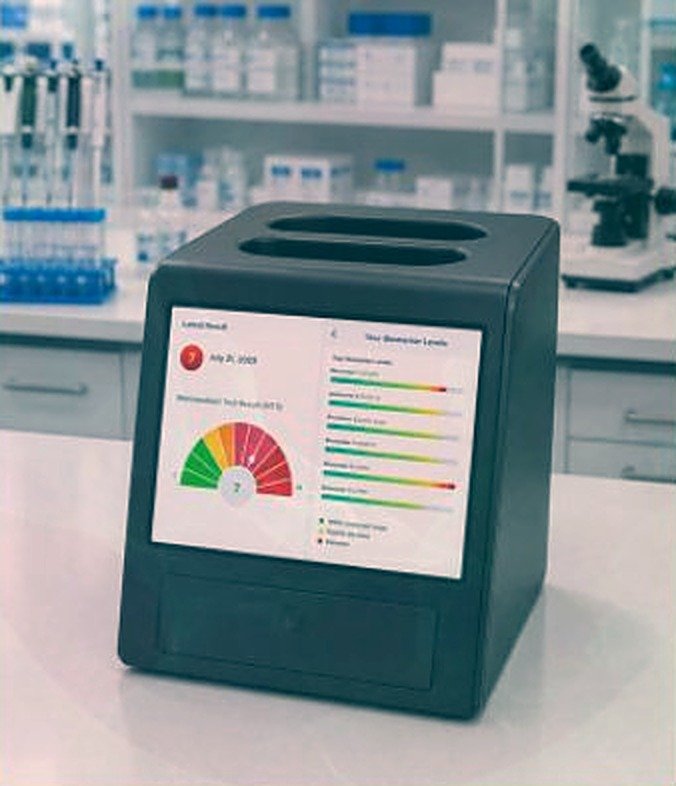
The first low-cost, portable cancer detection system built to close the gap between mammography capacity and demand — in rural clinics and overbooked urban health systems alike. No imaging center, no radiologist — just a finger-prick sample and a breast cancer risk result in under 30 minutes, simple enough for any trained healthcare worker to run.
Everything you need to know, in one place
Why 2 billion women aren’t screened
Fewer than 4% of eligible women worldwide get an annual mammogram. It isn’t for lack of need — cost, access, modesty, and the exam itself all stand in the way.
Fewer than 1 in 25 eligible women worldwide get an annual mammogram — every other figure here represents someone without regular access to screening.

women aged 35 and older worldwide — a population increasingly affected by breast cancer, most without access to regular screening.
Breast cancer is the most common cancer in women worldwide — and the population most in need of screening is the one least likely to have access to it.
The capacity gap, by the numbers
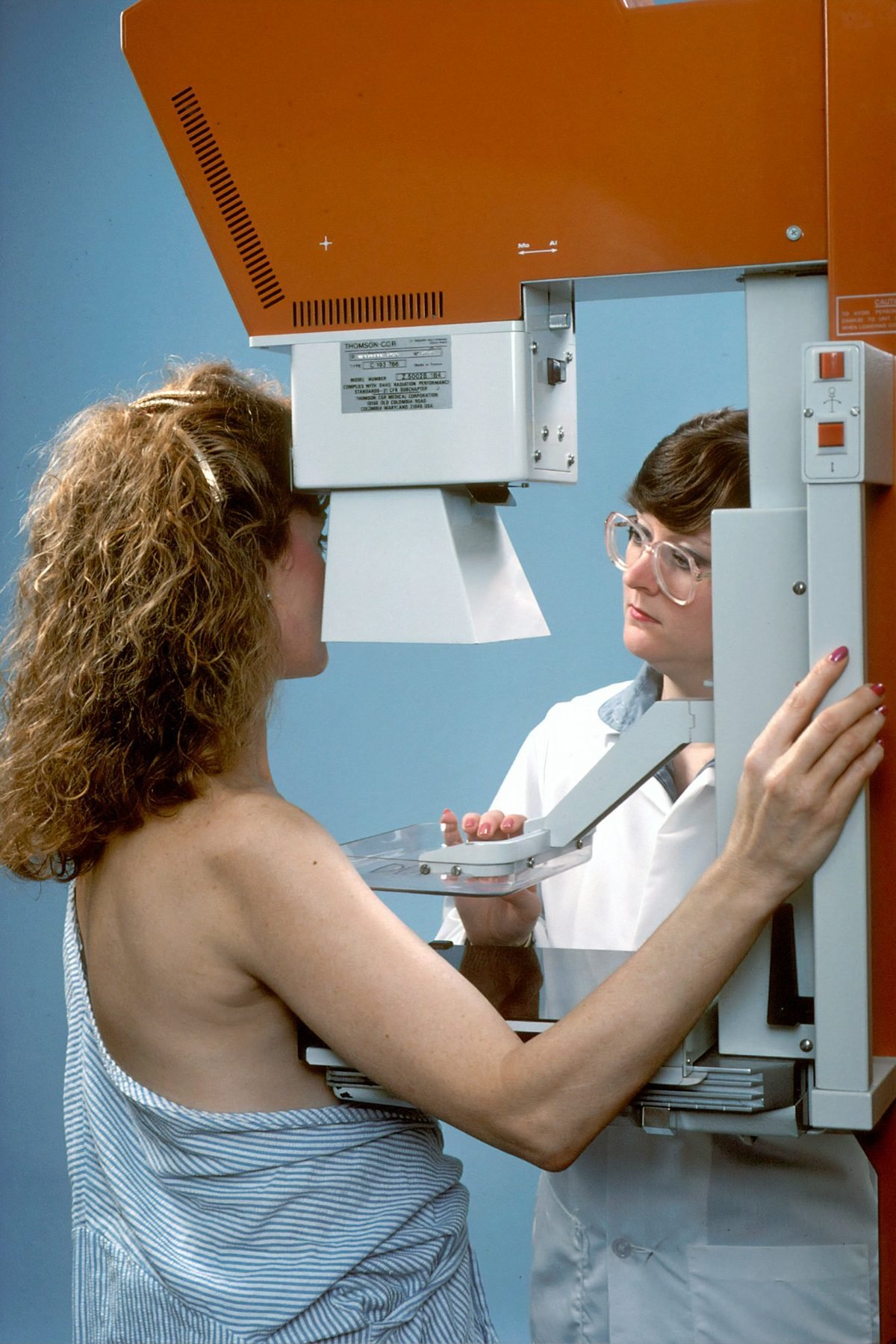
Even where mammography exists, capacity falls far short of the eligible population — in every market, not only low-resource ones.
 Mammography
MammoAlert™
Mammography
MammoAlert™
Drag to compare
Built to go where mammography can’t
MammoAlert trades a fixed imaging center and a radiologist for a portable device and a finger-prick sample — so early detection can reach clinics, pharmacies, and community health posts mammography infrastructure will never economically reach.
Swipe to see the full comparison
| Mammography | MammoAlert™ | |
|---|---|---|
| Equipment needed | Fixed X-ray imaging unit — calibration & upkeep | Portable point-of-care device |
| Sample | Breast X-ray imaging | Finger-prick blood sample |
| Who can run it | Trained technologist; radiologist required to read results | Any trained healthcare worker; AI-powered result |
| Time to result | Often days, pending radiologist read | Under 30 minutes |
| Where it can go | Hospitals & accredited imaging centers, mostly urban | Clinics, pharmacies, community posts, mobile units |
AI-driven protein biomarker diagnostics
The world’s first globally deployable diagnostic platform for early cancer detection — starting with breast cancer, built to expand to pan-cancer.
Biology-Guided AI
Five complementary biomarkers, interpreted with explainable AI.
Point-of-Care Platform
Low-cost and portable — simple enough for any trained worker to run in clinics, hospitals, pharmacies, and community settings everywhere.
Expandable Platform
Built to keep learning and to extend to more cancer types over time.
Global Impact
Designed for accessible, affordable detection in developed and emerging markets alike.
Strong Scientific Foundation
Built on nearly two decades of biomarker research and clinical development.
A capital-light way to close the detection gap
Reaching underserved women doesn’t have to mean building more imaging centers or training more radiologists.
Hospitals & Physicians
Extend detection capacity without new imaging equipment or radiologist hours — MammoAlert triages risk in under 30 minutes to help prioritize who needs follow-up imaging.
Governments & NGOs
Expand national early-detection programs into rural and underserved regions via mobile units, clinics, and community campaigns — no imaging center required.
Hear from those we serve
Dr. Raghuram
A clinical perspective on the need for accessible breast cancer detection.
Watch on YouTubeWomen Now: TiEcon 2017
A TiEcon 2017 panel on women’s health and access to cancer detection.
Watch on YouTubeGlobal cancer diagnostics market
Breast cancer detection segment
Built and exited before.
A team with deep IVD experience, spanning product, regulatory, and finance — several of whom have taken diagnostics companies through prior exits.





Dr. Nitin Malekar
Hear from the communities and clinicians we serve
Early proof-of-concept deployments and independent physician perspectives on the need for accessible breast cancer detection.
Proof of concept
Proof of concept: China
An early field look at accessible breast cancer detection in China.
Watch on YouTubeProof of concept: India
An early field look at accessible breast cancer detection in India.
Watch on YouTubeConversations & talks
Dr. Raghuram
A clinical perspective on the need for accessible breast cancer detection.
Watch on YouTubeHealth & Senate forum
Sanjeev Saxena on the need for accessible breast cancer detection.
Watch on VimeoWomen Now: TiEcon 2017
A TiEcon 2017 panel on women’s health and access to cancer detection.
Watch on YouTubeTiEcon 2014 radio interview
An early radio interview on the vision behind Harae Dx.
Watch on YouTubeDr. Nitin Malekar interview
A conversation on bringing accessible cancer detection to India.
Watch on YouTubeIn the news
Press coverage, founder features, and research on the mission behind Harae Dx.
Company & founder features
Founder profile: Sanjeev Saxena
A YesPress feature on the 30-year mission behind Harae Dx and MammoAlert.
Read the ProfileRole of AI and Microfluidics in Cancer Diagnostics
Harae Dx Corp. on how AI and microfluidics are converging to advance cancer diagnostics.
Read on LinkedInEarly Detection Can Save Lives
Sanjeev Saxena on why early cancer detection is critical to improving patient outcomes.
Read on LinkedInPleasanton’s Pioneers
Best Startup California’s spotlight on standout startups based in Pleasanton, California.
Read on LinkedInFrom Symptom-Based to Diagnostic-Based Treatment
Sanjeev Saxena on POC Medical Systems’ MammoAlert-Pandora CDx blood test and the shift toward diagnostic-led care.
Read the FeaturePOC Medical Systems: Looking to Disrupt Diagnostics
Express Healthcare profiles POC Medical Systems’ approach to point-of-care diagnostics.
Read the FeatureIndustry & research coverage
Cancer diagnostics: an industry on the cusp of growth
BioSpectrum Asia on the outlook for the cancer diagnostics industry amid an aging global population.
Read the ReportExpanding the Horizon for Breast Cancer Screening in India
A peer-reviewed mini-review (PMC/NIH) on AI-driven approaches to expanding breast cancer screening access in India.
Read the StudyBreast Cancer Is Rising in Young American Women
ScienceAlert reports on a Columbia University study showing breast cancer rates climbing among American women under 40.
Read the ArticleMeet the people behind Harae Dx
Hear directly from our founder on the journey behind Harae Dx and MammoAlert.